Viewed
1
Posted Jobs
0
Categories
Company Size
50+
About Business Network
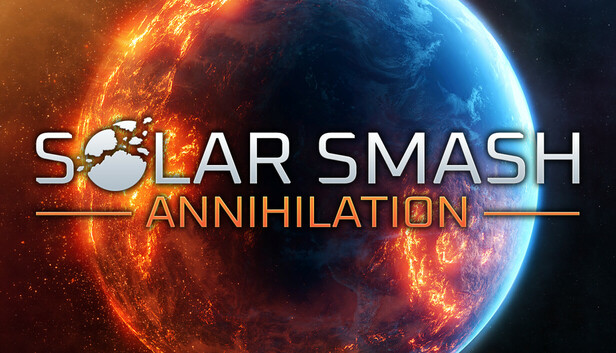
Getting Started with Solar Smash: A Friendly Guide to Planetary Mayhem
Have you ever wondered what would happen if you could pick up a planet and hurl it into the sun? Or watch a gas giant swallow its neighbors whole? Solar Smash lets you do exactly that. This physics-based sandbox game gives you a cosmic playground where you can build, collide, and destroy entire star systems. Whether you're a science enthusiast, a casual gamer looking for something relaxing, or someone who just enjoys watching things explode in slow motion, there's a lot to enjoy here.
This guide walks through how the game works, shares some ideas for getting the most out of it, and offers a few tips for newcomers.
The Basics of Gameplay
When you first open Solar Smash, you'll find yourself looking at a star system full of celestial bodies. The game runs on a real-time physics engine, which means gravity, momentum, and collisions all behave in ways that feel believable. Planets orbit their stars, moons circle their planets, and everything reacts when something gets too close.
Your main tool is the ability to create and manipulate objects. You can:
- Add celestial bodies such as planets, moons, stars, and asteroids, each with its own mass, size, and composition.
- Adjust properties like density and velocity so you control how objects move and how they interact.
- Apply forces to nudge objects into new orbits or send them careening across the system.
- Trigger collisions and watch the results unfold, from crater-scarred surfaces to full-scale stellar explosions.
The beauty of the sandbox is that there are no fixed goals or levels. You decide what happens next. Want to see whether a small moon can knock a planet out of its orbit? Go for it. Curious what happens when two stars meet? The game lets you find out.
Time controls are also useful. You can slow the simulation down to study a collision frame by frame or speed it up to watch long-term orbital changes play out. Switching between these speeds is one of the most satisfying parts of the experience.
Tips for Enjoying the Game
Start small. It's tempting to jump straight into building a massive star and blowing up everything in sight, but the game is more rewarding when you begin with a simple setup. Place a single planet around a star, add a moon, and observe how they interact. Once you understand how gravity behaves in your system, more complex experiments make more sense.
Experiment with mass and velocity. These two properties do most of the heavy lifting. A slow-moving massive object behaves very differently from a fast, light one. Try the same collision with different values and compare the results. You'll quickly develop an intuition for how momentum works.
Use the pause function. Stopping the simulation mid-action lets you examine positions, check orbital paths, and plan your next move. It's especially helpful when you're trying to set up a specific collision.
Keep notes on your favorite setups. If you create a system you love, take a mental or written note of the starting values. This makes it easy to recreate the scenario and tweak it for variations.
Don't be afraid of chaos. Some of the best moments come from unexpected results. A planet that you intended to nudge into a stable orbit might end up flung into deep space instead. Treat these surprises as part of the fun rather than failures.
Share your results. Game forums and communities often feature screenshots and descriptions of wild simulations. Browsing them can spark new ideas, and posting your own creations is a great way to connect with other players. If you're looking for the official game, you can find more information at Solar Smash.
Final Thoughts
Solar Smash offers something unusual: a chance to play with the forces that shape the universe, without any pressure to win. It works well as a relaxing way to unwind, a learning tool for basic physics concepts, or a creative outlet for designing your own chaotic solar systems. The best approach is to dive in, experiment freely, and enjoy the spectacle of your own cosmic creations coming together and falling apart.
So pick a star, add a few planets, and see what happens. The universe is yours to smash.